Learn how to select the right power supply from design to production, covering power requirements, efficiency, thermal management, compliance and reliability.

CCTV Power Supplies for Security and Surveillance Systems
Reliable power is essential for the continuous operation of CCTV cameras and security surveillance systems. From individual cameras protecting residential properties to large-scale installations in commercial buildings, warehouses and industrial facilities, the performance of a surveillance system depends on having a suitable and stable power supply.
Modern CCTV installations often involve more than cameras alone. Network switches, recording equipment, communication devices, infrared illuminators and other connected components may all have different power requirements. Selecting the right power solution is therefore an important part of designing a dependable security system.
Sunpower Electronics supports CCTV and security applications with power conversion solutions suited to different installation requirements, helping engineers, OEMs and system integrators address voltage compatibility, power distribution, environmental protection and backup power considerations.
Why Reliable Power Matters in CCTV Systems
A CCTV system is designed to provide monitoring and surveillance when required, whether during normal business operations, outside working hours or in response to a security incident.
An interruption to the power supply can cause cameras to stop recording, disrupt communication with network equipment or create gaps in surveillance coverage.
In larger installations, cameras may also form part of an integrated security network involving access control, intrusion detection, video management software and central monitoring facilities.
These interconnected systems place additional demands on the supporting power infrastructure.
A suitable CCTV power supply should be selected to provide:
Stable output voltage: Maintaining the electrical supply within the operating limits specified by the connected equipment.
Adequate power capacity: Supporting the maximum expected load, including additional functions such as infrared illumination, heating or motorised camera movement.
Electrical protection: Providing appropriate protection against faults such as overload, short circuits and overvoltage.
Reliable operation: Meeting the installation's operating temperature, environmental and continuous-duty requirements.
Backup power compatibility: Allowing continued operation during mains interruptions where the surveillance application requires it.
Power supply selection should consider the overall installation rather than individual camera requirements alone.
CCTV Power Supply Types and Installation Options
Different CCTV systems require different methods of power distribution.
While some cameras use a dedicated low-voltage DC supply, others receive power through their Ethernet connection. Larger surveillance networks may combine several approaches depending on the equipment, installation layout and system architecture.
AC/DC Power Supplies for CCTV Cameras
Many security cameras and related devices operate from a regulated DC supply.
Depending on the equipment, this may involve common nominal voltages such as 12V DC or 24V DC, although the required input must always be confirmed against the manufacturer's specifications.
An AC/DC power supply converts the available mains electricity into the regulated DC voltage required by the connected device.
These supplies may be available in several mechanical formats, including:
Desktop and plug-in adapters: Suitable for individual devices or smaller installations requiring an external power supply.
Enclosed power supplies: Used where power conversion equipment is incorporated into a suitable electrical or equipment enclosure.
DIN rail power supplies: Designed for installation alongside other electrical and control components within an appropriate cabinet.
Rack-mounted power solutions: Used in larger equipment installations where centralised power distribution and organised infrastructure are required.
The correct format depends on available installation space, output requirements, cooling, accessibility and environmental conditions.
Where a single power supply supports multiple cameras, the total connected load and the electrical distribution arrangement must be considered carefully.
Power over Ethernet (PoE) for IP CCTV Cameras
Power over Ethernet (PoE) allows compatible IP cameras to receive electrical power and network data through the same Ethernet cable.
This can simplify installations by reducing the need for separate power wiring to each camera.
PoE systems typically use a compatible network switch or injector to supply power, while the camera operates as the powered device.
Several IEEE PoE standards support different power requirements:
IEEE 802.3af (PoE): Supports up to 15.4W at the power sourcing equipment, with up to approximately 12.95W available to the connected device.
IEEE 802.3at (PoE+): Supports up to 30W at the power sourcing equipment, with up to 25.5W available to the connected device.
IEEE 802.3bt (PoE++): Provides higher power capabilities, with defined equipment classes supporting up to 90W at the power source and approximately 71.3W available to the connected device.
The appropriate standard depends on the camera's electrical requirements and supported PoE classification.
Higher-power cameras, including some pan-tilt-zoom (PTZ) models or equipment incorporating additional heating and illumination, may require a higher PoE power class.
It is also important to check the overall power budget of the PoE switch. A switch may have multiple compatible ports without being able to supply their maximum rated power simultaneously.
In these applications, the AC/DC power supply supporting the network equipment remains an important part of the CCTV power architecture.
Calculating CCTV Power Requirements
Choosing a power supply with insufficient capacity can affect the performance and reliability of connected cameras.
Before selecting a PSU, installers and system designers should calculate the total power demand and identify any operating conditions that may increase consumption.
The basic relationship between power, voltage and current is:
Power (W) = Voltage (V) × Current (A)
For example, consider a CCTV installation with four cameras, each requiring a maximum of 12W.
The combined camera load would be:
4 × 12W = 48W
If all four cameras operate from a compatible 12V DC supply, the combined output current requirement would be:
48W ÷ 12V = 4A
This establishes the nominal maximum camera load before accounting for cable voltage drop, power supply derating, additional equipment or an appropriate design margin.
The selected supply should accommodate the maximum expected operating demand, not simply the typical consumption recorded during normal operation.
This is particularly relevant to cameras incorporating:
Infrared illumination for night-time monitoring
Integrated heaters or demisting functions
PTZ motors and associated controls
Additional communication or peripheral devices
For installations using long cable runs, the voltage drop between the power supply and the camera must also be assessed.
Excessive voltage drop can leave the equipment operating outside its specified input voltage range, even when the PSU itself is producing the correct output voltage.
Battery Backup and CCTV Operation During Power Failures
In many security applications, CCTV monitoring is particularly important during unexpected events, including mains power interruptions.
A power failure may affect cameras, network equipment, recording systems and communication infrastructure simultaneously.
Battery-backed power supplies and uninterruptible power supply (UPS) arrangements can help maintain operation when the primary electrical supply is interrupted.
Depending on the system architecture, this may involve:
An AC/DC power supply with integrated battery charging functionality
A dedicated DC UPS arrangement
A battery-backed supply supporting network switches and other security equipment
An AC UPS supporting recording and communication infrastructure
When designing a backup power system, the required runtime must be calculated from the total supported load and the usable energy available from the battery system.
For example, a system consuming 60W continuously over a three-hour period would require:
60W × 3 hours = 180Wh
This represents the energy required by the load alone.
In practice, the battery system must also account for conversion losses, usable battery capacity, battery ageing, temperature and any relevant discharge limitations.
Consequently, backup duration cannot be guaranteed from the battery's nominal capacity alone.
An effective CCTV backup arrangement must also maintain power to the equipment necessary for the required surveillance function. Keeping cameras powered may offer limited benefit if the network switches or recording systems they depend on are not also supported.
Outdoor CCTV Power Supplies and Environmental Protection
CCTV cameras are frequently installed outdoors, where power equipment may be exposed to moisture, dust, temperature fluctuations and other environmental conditions.
The installation environment is an important consideration when selecting the power supply and its enclosure.
Ingress Protection
Ingress Protection (IP) ratings describe the level of protection an enclosure provides against access to hazardous parts, solid foreign objects and water ingress under defined test conditions.
For outdoor CCTV applications, an appropriately rated enclosure may be required to protect the electrical equipment against expected exposure.
For example:
IP65: Dust-tight protection and protection against water jets.
IP67: Dust-tight protection and protection against temporary immersion under specified test conditions.
The appropriate rating depends on the installation and anticipated exposure. An IP rating alone does not establish suitability for every outdoor environment.
Some power supplies are manufactured with environmentally protected enclosures, while others must be installed inside a separately rated cabinet.
Cable entries, connectors, seals and mounting arrangements must also be considered to maintain the required level of protection.
Operating Temperature and Thermal Management
Outdoor CCTV installations may experience substantial temperature variation, particularly in exposed locations or enclosed equipment cabinets.
Power supplies must be selected to operate within the expected ambient temperature range.
Where equipment is installed inside a sealed enclosure, internal temperatures can be significantly higher than the surrounding environment due to heat generated by electrical components and solar exposure.
Engineers should review operating temperature specifications, power derating and cooling requirements to ensure the selected PSU can deliver the necessary output under actual installation conditions.
Fanless power supplies may be advantageous in some environments by removing the need for mechanical fan maintenance, although adequate heat dissipation remains essential.
Electrical Safety and Protection Considerations
CCTV power supplies must meet the electrical safety requirements applicable to their intended use and installation.
For many power supplies used with audio, video and information technology equipment, the IEC 62368-1 family of standards is relevant.
In the UK, BS EN IEC 62368-1:2024+A11:2024 provides safety requirements for equipment within its scope.
The applicable standards and regulatory obligations must be confirmed for the specific PSU, its intended market and the complete installation.
Electrical protection features may include:
Short-circuit protection
Overload protection
Overvoltage protection
Overtemperature protection
Suitable electrical isolation
Depending on the product, these functions can help limit the consequences of abnormal operating conditions and protect the power supply or connected equipment.
Installers should also consider appropriate wiring, circuit protection, earthing arrangements and the separation of mains and low-voltage circuits.
For PoE installations, the compatibility of the power sourcing equipment and connected devices must be verified against the relevant IEEE requirements.
Key Factors When Selecting a CCTV Power Supply
The most suitable power solution depends on the surveillance system's electrical requirements, physical layout and operating environment.
Before selecting a CCTV power supply, engineers and installers should consider the following:
1. Camera Voltage and Power Requirements
Confirm the operating voltage and maximum power consumption specified by the camera manufacturer.
2. Number of Connected Devices
Calculate the total load of cameras and any additional equipment powered by the same supply.
3. Power Distribution Method
Determine whether the system uses individual DC supplies, centralised DC distribution, PoE or a combination of these approaches.
4. Cable Length and Voltage Drop
Assess the electrical losses associated with cable length, conductor size and operating current.
5. Environmental Conditions
Consider temperature, humidity, dust, water exposure and the required installation enclosure.
6. Backup Power Requirements
Establish whether the surveillance system must remain operational during mains interruptions and calculate the necessary runtime.
7. Safety and Protection
Review applicable safety standards, electrical isolation and the protection features required for the application.
8. Maintenance and Future Expansion
Consider installation accessibility, serviceability and whether the system may need to support additional cameras or equipment.
Evaluating these factors as part of the overall system design can help prevent avoidable compatibility issues and support reliable long-term operation.
Supporting Reliable CCTV and Security System Power
From individual surveillance cameras to larger integrated security networks, dependable power conversion is an essential part of CCTV system design.
Selecting a suitable solution requires an understanding of camera requirements, distribution methods, environmental conditions and the level of power continuity expected from the installation.
Sunpower Electronics supports engineers, OEMs and security system integrators in identifying appropriate power conversion solutions for CCTV and surveillance applications.
With access to AC/DC power supplies, industrial power conversion technologies and battery backup solutions, Sunpower can help customers evaluate suitable options based on their electrical and operational requirements.
Contact the Sunpower Electronics technical team to discuss your CCTV power supply requirements.
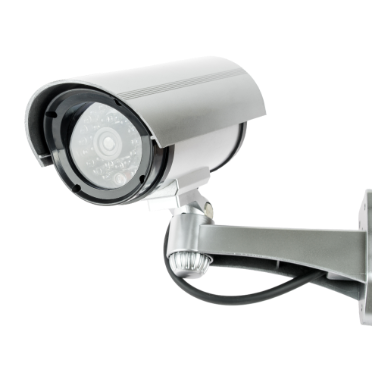
Recommended for you
Discover how DC-DC converters support electrified DC grids, industrial automation and energy storage through efficient voltage conversion and power distribution.

Discover how to select reliable power supplies for harsh environments, including extreme temperatures, dust, moisture, vibration and industrial applications.
Explore CCTV power supply solutions for security cameras and surveillance systems, including AC/DC power conversion, outdoor installations and battery backup.
Speak to a technical expert!
Have a question or request? Click below to contact us, and our team will be happy to help.