Bridge Converter
What is a Bridge Converter?
A bridge converter is a DC-DC converter topology that uses four switching devices arranged in a bridge configuration to efficiently transfer power through a transformer. It is commonly used in high-power applications where isolation, efficiency and voltage conversion are required.
Bridge converters are widely used in switch mode power supplies (SMPS) and industrial power systems.
How a Bridge Converter Works
A bridge converter operates by switching pairs of transistors in a controlled sequence to generate an alternating waveform across a transformer.
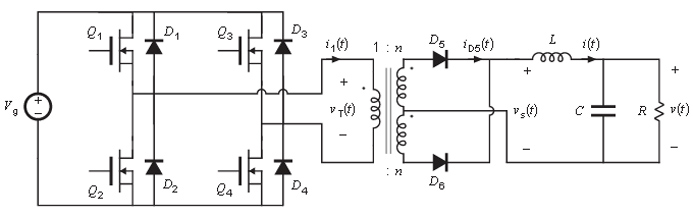
Fig 1: Full-bridge buck-derived converter
In a full-bridge configuration:
- One pair of switches conducts during one half cycle
- The opposite pair conducts during the next cycle
- This creates an alternating voltage across the transformer
The transformer then:
- Provides electrical isolation
- Steps voltage up or down depending on the turns ratio
Main Stages of a Bridge Converter
A bridge converter typically consists of three key stages:
- Switching stage, which generates the waveform
- Energy transfer stage, usually a transformer
- Rectification stage, which converts the signal back to DC
These stages work together to deliver controlled and isolated output power.
Types of Switching Devices
Bridge converters use various switching components, including:
- MOSFETs, commonly used for high efficiency and simple drive circuits
- IGBTs for higher power applications
- Bipolar transistors or thyristors in specific designs
MOSFETs are the most common choice in modern SMPS designs.
Control and Operation
The output voltage of a bridge converter is controlled using pulse width modulation (PWM).
Key factors affecting output include:
- Duty cycle of the switching signal
- Input voltage
- Transformer turns ratio
Careful control is required to avoid transformer saturation and ensure efficient operation.
Advantages of Bridge Converters
- High efficiency in high-power applications
- Electrical isolation through transformer
- Ability to handle wide input and output voltage ranges
- High power density
- Suitable for bidirectional power flow in advanced designs
Disadvantages
- More complex design compared to simpler converters
- Higher component count
- Losses from switching and transformer operation
- Higher cost in some applications
Where Bridge Converters Are Used
Bridge converters are commonly used in:
- High-power AC-DC and DC-DC power supplies
- Industrial power systems
- Motor drives and inverters
- RF heating systems
- Electric vehicle and energy storage systems
They are typically used in applications above 150W where efficiency and performance are critical.
Bridge Converter vs Other Topologies
Compared to simpler converters:
- Bridge converters handle higher power levels
- They provide isolation through transformers
- They offer better efficiency at scale
However, they require more complex control and design.
People Also Ask
What is a full bridge converter?
A full bridge converter is a DC-DC converter that uses four switching devices to control power flow through a transformer, providing isolation and efficient voltage conversion.
Why are bridge converters used in power supplies?
Bridge converters are used because they offer high efficiency, electrical isolation and the ability to handle high power levels.
What is the difference between half bridge and full bridge converters?
A half bridge uses two switching devices, while a full bridge uses four, allowing higher power handling and better efficiency.
What is PWM in a bridge converter?
Pulse width modulation (PWM) controls the switching timing of the transistors, allowing regulation of the output voltage.
Where are bridge converters used?
They are used in high-power systems such as industrial power supplies, motor drives, electric vehicles and energy storage applications.
Speak to a technical expert!
Have a question or request? Click below to contact us, and our team will be happy to help.