Burn-In
What Is Burn-In Testing in Electronics?
Burn-in is a reliability testing process where electronic components or systems are exposed to elevated electrical and thermal stress over an extended period. The goal is to identify early failures caused by manufacturing defects before the product is deployed.
By operating devices under controlled stress conditions, weak or faulty components can be detected and removed, improving overall product reliability.
Why Burn-In Matters
Electronic components often fail early in their lifecycle due to hidden defects. Burn-in testing helps to:
- Detect early-life failures
- Improve product reliability
- Reduce field failures and warranty issues
- Ensure stable long-term operation
This process is widely used in industries where reliability is critical, such as industrial systems, medical devices and telecommunications.
The Bathtub Curve and Burn-In
Component failures typically follow a pattern known as the bathtub curve, which includes three stages:
- Early failure stage with a high failure rate
- Random failure stage with a low and stable failure rate
- Wear-out stage where failure rates increase again
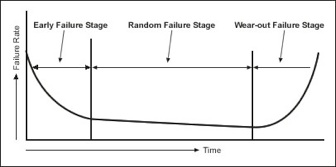
Burn-in testing is designed to eliminate failures in the early stage, ensuring only reliable components reach operation.
How Burn-In Testing Works
During burn-in, components are operated under stress conditions such as:
- Elevated temperature
- Increased voltage
- Continuous operation over time
Devices that fail during this process are removed, while those that pass are considered reliable for use.
Types of Burn-In
- Dynamic burn-in: Devices are powered and actively stimulated while under stress
- Static burn-in: Devices are subjected to stress without active input signals
- Burn-in with test: Outputs are monitored continuously during the process
Each method is used depending on the level of testing required.
Burn-In Equipment
Burn-in testing requires specialised equipment:
Burn-In Chamber
Provides a controlled environment for temperature, time and electrical stress.
Burn-In Boards
Connect devices to the test system and distribute power and signals under high-temperature conditions.
Burn-In Sockets
Ensure reliable electrical contact between the device and the test system during testing.
Burn-In at System Level
Burn-in can be applied to individual components or complete assemblies.
Testing full systems can help identify:
- Interconnection issues
- Soldering defects
- Contact reliability problems
This approach is useful for ensuring overall system performance.
Advantages of Burn-In
- Identifies weak or defective components
- Improves reliability and product quality
- Helps estimate component lifespan
- Reduces early failure rates in the field
- Supports root cause analysis and design improvement
People Also Ask
What is burn-in testing in electronics?
Burn-in testing is a process where components are operated under stress conditions to detect early failures and improve reliability before use.
Why is burn-in testing important?
It helps eliminate defective components early, reducing the risk of failure in real-world applications and improving overall system reliability.
What is the bathtub curve in electronics?
The bathtub curve shows failure rates over time, with high early failures, stable operation and increased failures at the end of life.
What is the difference between burn-in and normal testing?
Normal testing checks performance under standard conditions, while burn-in applies stress to identify hidden defects and early failures.
Does burn-in improve reliability?
Yes, by removing weak components early, burn-in ensures that only reliable devices are used in final applications.
Speak to a technical expert!
Have a question or request? Click below to contact us, and our team will be happy to help.